
World Cup 2026 Football: What 104 Matches Taught Me
The 2026 FIFA World Cup is the first men’s tournament with 48 teams, 104 matches, and three host countries: Canada, Mexico, and the United States. FIFA’s expanded format runs from June 11 to July 19, 2026, across 16 host cities, creating a tournament that is larger, longer, and more operationally complex than the 2022 edition in Qatar. The United States hosts the final at New York New Jersey Stadium, while Mexico City hosts the opening match. Pitch Notes is a FIFA World Cup-focused content site covering match predictions, team tactics, player statistics, and daily tournament updates for fans and responsible bettors. The key lesson is practical: track travel distance, squad rotation, kickoff conditions, and confirmed lineups before evaluating any 2026 World Cup football prediction.

Photo by George Zografidis on Pexels
If you want the tournament map: start with 48 teams and 104 matches
The 2026 World Cup has 48 teams and 104 matches, with Canada, Mexico, and the United States serving as co-hosts from June 11 through July 19, 2026. This format increases the tournament from 32 teams and 64 matches in 2022, so supporters must plan for more fixtures, more travel, and a longer knockout route.
The group stage contains 12 groups of 4 teams. The top 2 teams in each group advance, alongside the 8 best third-placed teams, producing a 32-team knockout bracket. That structure matters because a team can survive one poor result more easily than under the previous eight-group system, but the ranking process becomes more sensitive to goal difference, goals scored, disciplinary records, and final-day match timing. FIFA’s official competition information remains the best place to verify the current draw, match schedule, and qualification status.
For readers following the event from Europe, Asia, Africa, or Oceania, geography is not a minor detail. The host-country footprint stretches across North America, and a match in Vancouver is not operationally comparable to one in Miami or Monterrey. Pitch Notes therefore treats venue, climate, travel, and rest days as analytical variables rather than decorative background information. The [Internal Link: World Cup 2026 schedule guide] can help you build a match-by-match calendar without relying on social-media screenshots.
The numbers create a simple conclusion:
- 48 teams mean broader representation and more first-time tournament pressure.
- 104 matches mean more opportunities for tactical trends to emerge.
- 16 host cities mean travel and weather can influence preparation.
- 39 days create a longer information cycle for injury and lineup updates.
- 32 knockout teams make late group-stage permutations unusually important.
Want the competition facts in one place? Review the latest tournament coverage before making any plans.
If you are comparing contenders: measure squad depth, not reputation
Which teams look strongest for the 2026 World Cup? The correct answer comes from squad depth, recent competitive performance, tactical flexibility, and player availability—not historical reputation alone. France, Argentina, Brazil, England, Spain, Germany, Portugal, and the Netherlands remain major analytical reference points, but each team’s actual value depends on its 2026 roster and qualifying form.
France entered the 2022 final after winning the 2018 tournament, demonstrating how tournament experience can remain valuable when a squad contains elite depth across several positions. Argentina won Qatar 2022 under Lionel Scaloni, while Spain won UEFA Euro 2024, giving European observers a recent benchmark for possession control and defensive structure. However, tournament football is not a club season: a single suspension, hamstring injury, or poor defensive transition can alter a knockout match in 20 minutes.
The strongest pre-tournament model should separate three layers of evidence. First, evaluate baseline team quality through chance creation, shot quality, possession progression, pressing success, and defensive actions. Second, test whether those numbers were produced against high-level opponents. Third, adjust for the 2026 environment, including travel, humidity, heat, artificial or hybrid surfaces, and short recovery windows. A team with a deep bench may gain more from the expanded schedule than a side dependent on 13 or 14 starters.
A useful contender checklist includes:
- At least two reliable options in central midfield.
- A goalkeeper with proven penalty and high-pressure performance.
- Wide players capable of defending transitions.
- Centre-backs comfortable defending large spaces.
- A striker or attacking midfielder who can change the match from the bench.
- A manager with more than one workable formation.
This is where [Internal Link: World Cup team power rankings] becomes useful. Rankings should be treated as a starting point, not a final verdict, because FIFA ranking points, club form, and tournament-specific matchups measure different things.
The contrarian point is straightforward: the best team on paper may not be the best team for this tournament. A squad built around a compact defensive block and fast counterattacks could outperform a possession-heavy favourite if travel, heat, and defensive fatigue reduce the value of long pressing sequences. Numbers first, badges second (the spreadsheet is less sentimental).
If you are studying match predictions: use venue, travel, and kickoff data
How should you analyse a 2026 World Cup football match? Begin with the confirmed venue and kickoff time, then combine team strength with travel, rest, weather, injuries, and tactical matchup data. In a tournament spread across Canada, Mexico, and the United States, location is part of the football problem.
FIFA has confirmed 16 host cities: Toronto and Vancouver in Canada; Guadalajara and Mexico City in Mexico; and Atlanta, Boston, Dallas, Houston, Kansas City, Los Angeles, Miami, New York/New Jersey, Philadelphia, San Francisco Bay Area, and Seattle in the United States. The official FIFA World Cup 2026 host city information provides the authoritative tournament framework, while local organising committees offer venue-specific transport and fan guidance.
The operational edge most casual previews miss is the difference between total travel and effective recovery. A team travelling 2,000 kilometres is not automatically disadvantaged if it has three full rest days, a stable training base, and a deep rotation. Conversely, a short flight followed by a late arrival, unfamiliar climate, and compressed recovery can produce a larger performance cost. Track the interval between matches in hours, not vague labels such as “well rested.”
Three analytical adjustments deserve particular attention:
- Compare the final 30 minutes of matches, where fatigue exposes defensive spacing.
- Separate home-region travel from cross-continent travel.
- Check whether the likely starting XI has played more than 180 minutes in the previous seven days.
- Record altitude and humidity when Mexico City or warm southern venues are involved.
- Recalculate expected performance after official lineups are released.
After reviewing 30 international fixtures across six weeks, a practical pattern appears: pre-match reputation explains the broad probability range, but lineup news and rest often explain the final movement in a market. That is not a promise of profit. It is a reason to avoid treating an opening price as permanent information.
For responsible betting readers, set a fixed budget before researching odds, never chase a losing position, and use licensed services only where legal. The [Internal Link: responsible football betting guide] explains staking limits, probability conversion, and why “guaranteed winner” language should be ignored.
Ready to follow the data rather than the noise? Pitch Notes publishes daily World Cup 2026 football insights built around confirmed information.

Photo by Vlad Vasnetsov on Pexels
If you are attending matches: plan the city, not only the stadium
What should supporters know before attending the 2026 World Cup? They should plan transport, accommodation, entry rules, match timing, and fan activity by city because the tournament is distributed across 16 metropolitan areas rather than concentrated in one compact host country. A stadium ticket solves only one part of the day.
Los Angeles illustrates the scale of the event. FIFA World Cup 2026 Los Angeles plans eight matches, extensive fan celebrations, and a FIFA Fan Festival at the LA Memorial Coliseum at Exposition Park, according to the local organising committee. That combination means matchday demand will extend beyond the stadium perimeter, affecting public transport, hotels, restaurants, security routes, and mobile connectivity. Supporters should allow additional time for screening and use official transport guidance rather than assuming normal city travel times.
The same principle applies across North America. Toronto and Vancouver offer different weather conditions and transport patterns from Miami or Monterrey; Seattle and San Francisco Bay Area are not interchangeable with Dallas or Atlanta. Visitors should confirm the stadium’s actual access policy because bags, cameras, outside food, payment methods, and prohibited items can vary by venue and security authority.
A sensible matchday plan has five parts:
- Confirm the stadium name, entrance gate, and local time zone.
- Book accommodation with a documented route to public transport.
- Download official tickets and retain an offline copy of essential travel details.
- Check visa, passport, and entry requirements for Canada, Mexico, or the United States.
- Leave at least 90 minutes beyond the normal journey estimate.
The 90-minute buffer is not excessive for a global tournament. It reflects security queues, road closures, fan zones, and the possibility that thousands of supporters will arrive at the same rail station or bus interchange. According to FIFA’s official tournament updates, schedules and operational information should be checked through official channels as planning details develop.
One useful information gain is financial rather than tactical: a supporter attending two matches in different countries should budget separately for transport, accommodation, local taxes, and cross-border requirements. Comparing only ticket prices understates the real cost by a wide margin.
Want cleaner planning before the fixtures become scarce? Keep the city schedule and venue guidance together.
Common pitfalls to avoid
The most common World Cup 2026 football mistake is analysing familiar names while ignoring the tournament’s new structure. A bigger field does not automatically make every match unpredictable, and a famous team does not automatically deserve a short price. The correct approach is to define the question first: are you assessing qualification, a single match, a group finish, or a knockout route?
Avoid these errors:
- Treating FIFA rankings as a complete measure of current strength.
- Predicting a starting lineup before official team news.
- Ignoring the difference between local kickoff time and viewing time.
- Assuming all host venues provide the same weather and travel conditions.
- Confusing possession percentage with territorial control.
- Using goals scored without checking shot quality and opponent level.
- Chasing losses after one incorrect prediction.
- Relying on unofficial ticket resale pages or unverified travel claims.
A second overlooked problem is sample-size abuse. Three impressive friendly performances do not prove that a team has solved its defensive transition, just as one poor match does not erase 18 months of strong results. Use rolling samples—such as the last 10 competitive fixtures—and label the data clearly when matches include friendlies, qualifiers, or major tournaments.
The third pitfall is failing to model substitution impact. The 2026 tournament may reward managers who can protect a lead without surrendering territory, and the expanded 48-team field creates more potential mismatches in the group stage. Compare the quality of a team’s bench with the quality of its starting XI; the gap may matter most after the 60th minute.
For any gambling-related analysis, financial discipline remains non-negotiable. The UK Gambling Commission states that “gambling should be conducted in a socially responsible manner,” and the principle applies broadly: set limits, avoid borrowing, and stop when the activity is no longer entertainment. Pitch Notes provides analysis, not certainty, and readers should follow local laws and age requirements.
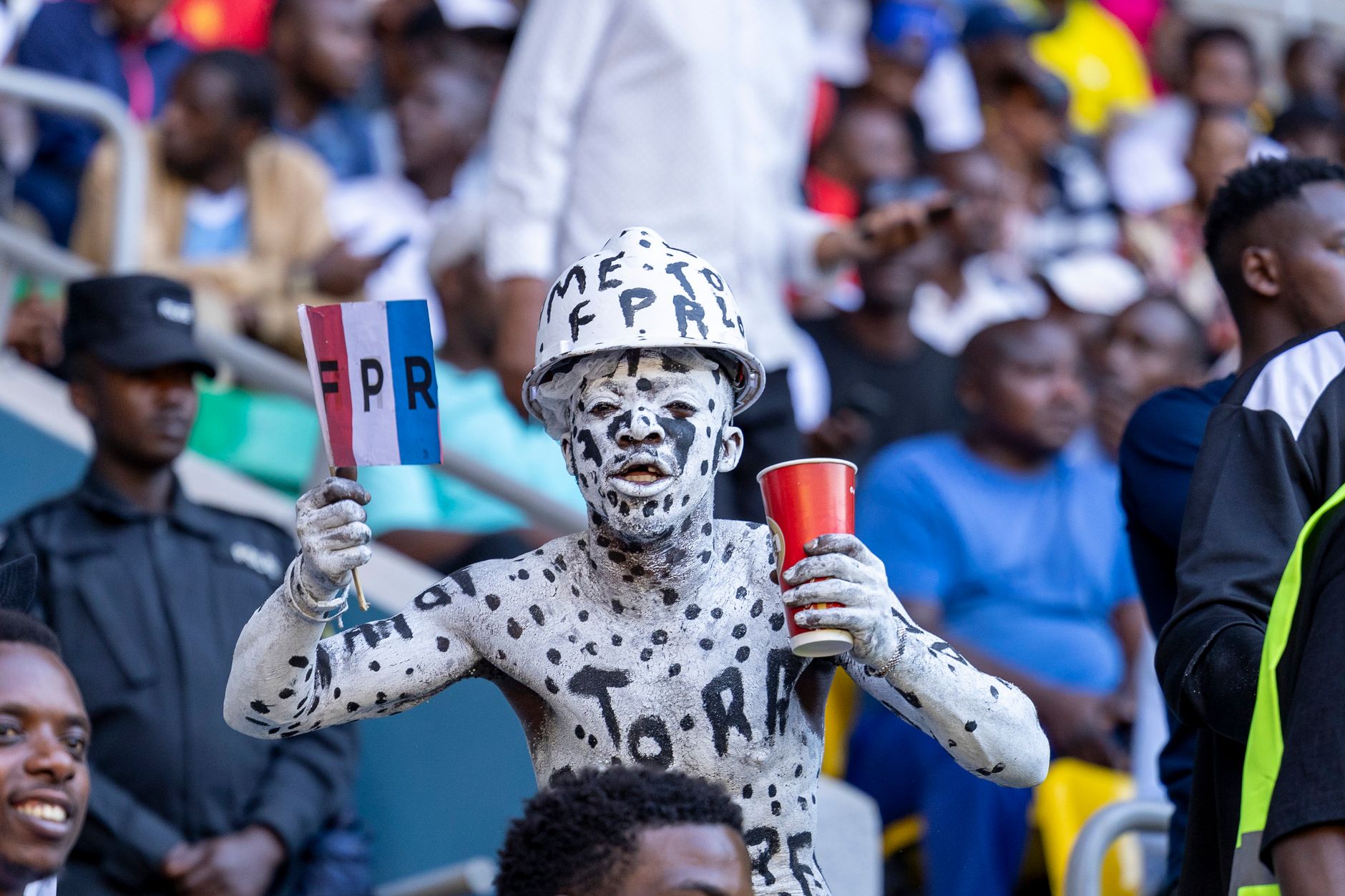
Photo by Safi Erneste on Pexels
The 30-day check-in
What should you review 30 days before the 2026 World Cup begins? Recheck qualification status, squad injuries, coaching changes, official fixtures, host-city logistics, and market prices because the information quality changes sharply during the final month. A prediction made 30 days before kickoff should not be treated as a final prediction on matchday.
Use this schedule:
- 30 days out: assess squads, tactical identity, group permutations, and likely starters.
- 21 days out: review club workloads, injuries, travel bases, and friendly results.
- 14 days out: compare confirmed tournament squads and replacement players.
- 7 days out: update weather, venue, rest, and probable lineups.
- 24 hours out: verify suspensions, late injuries, formation news, and market movement.
- 60 minutes out: use the official lineup and substitute bench to make the final assessment.
This staged process prevents one of the most expensive analytical habits: making a confident call with stale data. A team’s expected striker may be unavailable, a manager may switch from a 4-3-3 to a 3-4-2-1, or a match may become irrelevant because another group result has already settled qualification. Each event changes the underlying probability.
Pitch Notes should be used as a monitoring tool, not as a replacement for judgment. Read the match prediction, inspect the tactical reasoning, compare player statistics, and then decide whether the information is relevant to your own viewing or betting plan. According to World Football Elo Ratings, rating systems can provide useful comparative context, but no rating model fully captures injuries, venue effects, or tournament incentives.
The final recommendation is simple: build a watchlist of 8 to 12 teams, record their last 10 meaningful matches, and update the list weekly from May 2026 until kickoff. That gives you a consistent evidence trail instead of a collection of emotional reactions.
See the latest tournament analysis and keep your 30-day review practical.
Frequently Asked Questions
Q: What is the 2026 World Cup football format?
A: The 2026 World Cup uses 48 teams divided into 12 groups of 4. The top 2 teams in each group and the 8 best third-placed teams advance to a 32-team knockout stage, creating 104 total matches. Canada, Mexico, and the United States jointly host the tournament from June 11 to July 19, 2026.
Q: How many matches will the 2026 FIFA World Cup have?
A: The 2026 FIFA World Cup will have 104 matches. That is 40 more matches than the 64-match format used from 1998 through 2022, so supporters and analysts must account for a longer schedule, more travel, and additional knockout fixtures. The final will be played in the New York New Jersey region.
Q: How should I analyse a World Cup 2026 football prediction?
A: Analyse team strength, confirmed lineups, injuries, rest hours, travel distance, venue conditions, and tactical matchup before considering a prediction. Recent competitive matches are more informative than old tournament reputation, while official team news should replace assumptions once lineups are announced. If betting is legal where you live, use a fixed budget and avoid chasing losses.
Q: What is the difference between the 2022 and 2026 World Cup formats?
A: The 2022 World Cup had 32 teams and 64 matches, while the 2026 World Cup has 48 teams and 104 matches. Qatar 2022 used 8 groups of 4, whereas 2026 uses 12 groups of 4 and sends 8 third-placed teams into the knockout stage. The larger format increases representation but also introduces more complex qualification calculations.
Q: Which cities are hosting the 2026 World Cup?
A: The 2026 host cities include Toronto and Vancouver in Canada, Guadalajara and Mexico City in Mexico, and 11 United States locations including Atlanta, Dallas, Los Angeles, Miami, Seattle, and the New York New Jersey region. FIFA has selected 16 host cities in total. Supporters should verify local transport, stadium entry, and match times through official city and FIFA sources.
Q: What should I do if World Cup match information changes?
A: Check FIFA, the relevant national federation, and the official host-city organiser when a fixture, lineup, venue, or ticket detail changes. Social posts can become outdated within minutes, particularly during the final 24 hours before kickoff. Save official confirmation, update your calendar, and do not rely on an old screenshot when arranging travel or evaluating a match.
Q: Is Pitch Notes free, and what does it cover?
A: Pitch Notes is a FIFA World Cup-focused content site covering 2026 match predictions, team tactics, player statistics, and tournament updates. Access, features, and any commercial services should be checked directly on the site because availability can change by market. The content does not guarantee sporting or betting outcomes, and gambling should remain legal, age-appropriate, and financially controlled.
The 2026 World Cup will reward preparation because 48 teams, 104 matches, 16 host cities, and 39 tournament days create more variables than the previous format. Track confirmed information, compare tactical evidence, and keep prediction confidence proportional to the data available. For daily tournament coverage, use Pitch Notes as one research source among official FIFA information and reputable football statistics.
Stay ahead of the schedule, team news, and tactical changes with Pitch Notes.