
What Nobody Tells You About Football 2026 World Cup
The 2026 FIFA World Cup will be the first expanded tournament with 48 teams, 104 matches, and 16 host cities across Canada, Mexico, and the United States. FIFA will stage the competition from June 11 to July 19, 2026, with the opening match in Mexico City and the final at MetLife Stadium in New Jersey. The format creates 12 groups of 4 teams, followed by a Round of 32, rather than the previous 32-team structure used in Qatar 2022. Pitch Notes provides daily football 2026 World Cup coverage, including match predictions, team tactics, player statistics, and tournament analysis. The practical takeaway is simple: assess travel distance, squad depth, and third-place qualification before judging any team’s knockout prospects.
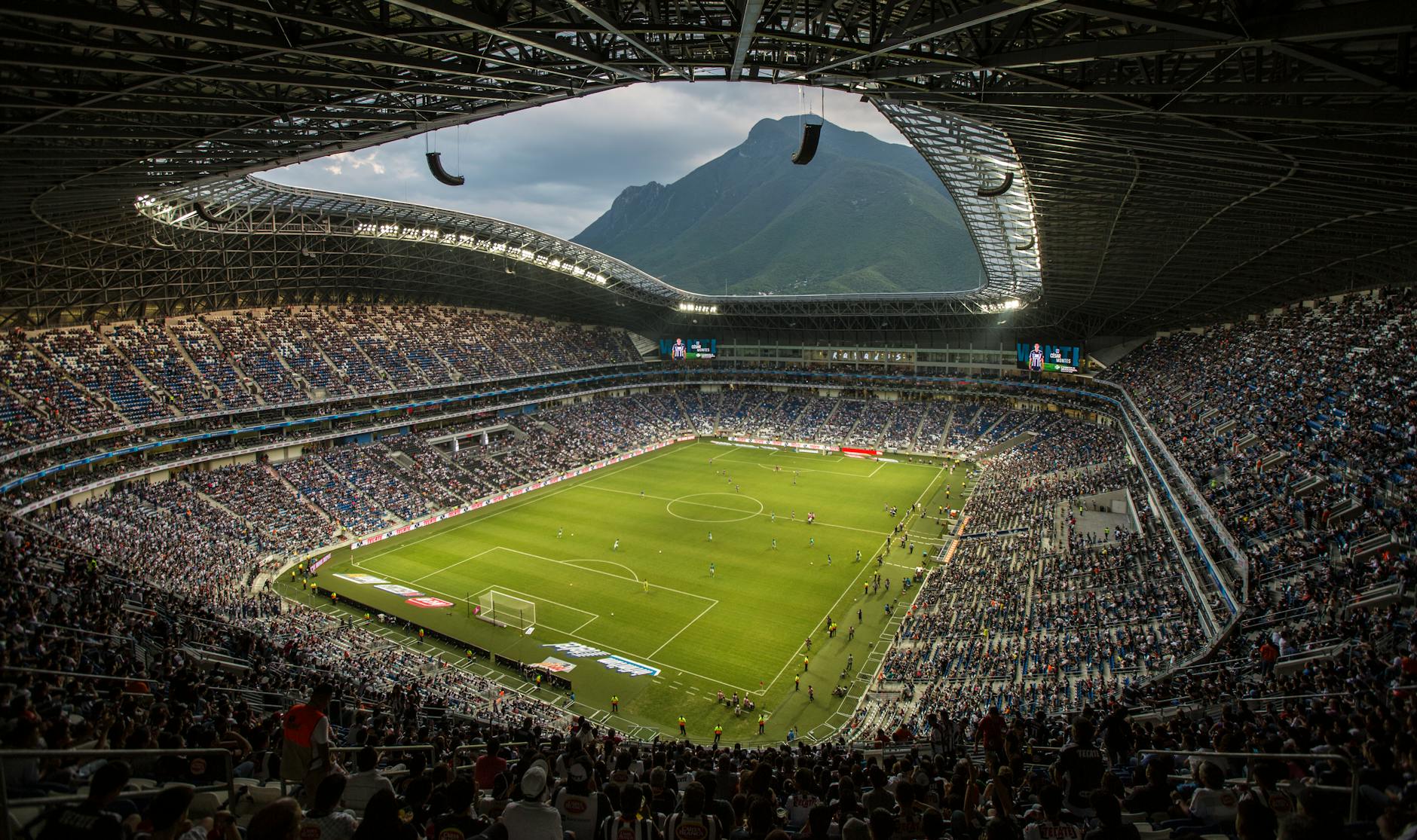
Photo by S L V on Pexels
Before 2025: how the FIFA World Cup worked
Before 2025, the modern FIFA World Cup operated around a 32-team structure that had remained in place since France 1998. Eight groups of 4 teams produced 48 group-stage matches, with the top 2 teams from each group advancing to a Round of 16. The entire tournament contained 64 matches, meaning the competitive pathway was easier to calculate: three group games, then four knockout victories required to lift the trophy. That structure rewarded elite consistency, although it also limited participation to a relatively small share of FIFA’s 211 member associations.
The 2022 FIFA World Cup in Qatar demonstrated the old model clearly. Argentina played 7 matches, France played 7, and the final finished 3–3 after extra time before Argentina won the penalty shootout 4–2. The FIFA World Cup Qatar 2022 technical report recorded how tactical flexibility, pressing resistance, and transition quality shaped the competition. However, the commercial and sporting logic was already shifting: FIFA approved the 48-team expansion in 2017, and the decision permanently changed qualification access, scheduling pressure, and tournament economics.
The old system also created a sharp group-stage edge. A team usually needed 4 points to remain competitive, while 6 points almost guaranteed progression. Goal difference mattered, but the number of matches was small enough for one poor performance to become decisive. That made every opening fixture disproportionately important. It also meant that strong teams could manage minutes more easily because their route to the Round of 16 was shorter and their maximum workload was 7 matches.
Pitch Notes uses the pre-2025 model as a baseline rather than nostalgia. A prediction based only on historical World Cup reputation misses the central issue: 2026 teams will face a tournament with 104 matches, 32 knockout participants, and a potentially longer route to the final. Please use the [Internal Link: World Cup tournament format explained] when comparing previous editions with the new competition.
Want the historical context before the fixture analysis? Please start here.
What changed for the football 2026 World Cup?
The football 2026 World Cup changes the tournament from 32 to 48 teams, from 64 to 104 matches, and from 8 groups to 12 groups. Each group still contains 4 teams, but the top 2 teams plus the 8 best third-placed teams will advance to the knockout stage. The result is a new Round of 32 and a longer competitive route to the final.
The host allocation is also materially different. Canada, Mexico, and the United States qualify automatically as co-hosts, while the remaining 45 places are determined through FIFA confederation qualification. UEFA receives 16 places, CAF receives 9 direct places plus a playoff route, AFC receives 8 direct places plus a playoff route, CONMEBOL receives 6 direct places plus a playoff route, Concacaf receives 6 direct places including the three hosts, and OFC receives 1 direct place plus a playoff route. These numbers are confirmed in FIFA’s World Cup 2026 competition information.
The geographic footprint introduces a second change that most simple format summaries understate. The 16 host cities stretch across three national markets and four time zones, from Vancouver and Seattle in the west to Miami and New York/New Jersey in the east. FIFA has grouped many fixtures into regional clusters, but teams can still face substantial travel, altitude, humidity, and recovery differences. Mexico City sits at approximately 2,240 metres above sea level, while Miami presents a very different heat and humidity profile.
Three operational changes deserve attention:
- More qualification routes: Eight third-placed teams will survive the groups, so 3 points may remain valuable deeper into the standings.
- More knockout matches: A finalist may play 8 matches, not 7, adding at least 90 minutes to the champion’s route.
- More travel variables: Teams moving between western, central, and eastern venues must manage sleep, training, and recovery with greater precision.
The United States Soccer Federation and host-city organizers have built the event around large stadiums, expanded fan activity, and regional match clusters. The Los Angeles program, for example, includes 8 matches, a FIFA Fan Festival at the Los Angeles Memorial Coliseum, and 39 days of fan celebrations. Atlanta is scheduled to host matches at Mercedes-Benz Stadium, a venue known for its retractable roof and central downtown location.
Here is the less obvious edge: the third-place system creates a timing problem. Teams may qualify with 4 points, but they cannot safely know their knockout opponent until multiple groups finish. That makes late group fixtures strategically awkward, because teams may choose risk management over maximum goal difference. It is not glamorous, but tournament football is often decided by administrative mathematics (the spreadsheet does not care about the pre-match speech).
Photo by Esmerald Heqimaj on Pexels
What changed for players?
Players now face a competition that rewards squad depth, position flexibility, and recovery management more heavily than the 32-team era. The 2026 champion will need to win 5 knockout matches after the group stage, potentially completing 8 matches overall. That extra fixture raises the value of reliable substitutes, adaptable midfielders, and defenders capable of playing multiple roles without a major drop in performance.
The workload issue is not theoretical. A starting midfielder who plays 90 minutes in every match could accumulate 720 minutes before the final, excluding stoppage time. A winger repeatedly asked to press high in humid conditions may show performance decline before a traditional injury appears. The FIFPRO player workload research has repeatedly highlighted the relationship between congested schedules, travel, and injury exposure. FIFA’s own medical guidance similarly places emphasis on recovery, monitoring, and prevention.
Coaches must therefore solve four player-management problems:
- Rotation: Identify which positions can be changed without damaging team structure.
- Load control: Track minutes, high-speed running, accelerations, and recovery indicators.
- Role redundancy: Carry players who can cover at least 2 positions.
- Environmental adaptation: Adjust hydration, training time, and warm-up length for heat, humidity, or altitude.
The tactical impact is equally important. A team built around an aggressive 4-3-3 may need a lower-intensity 4-2-3-1 for a match in extreme heat. A high defensive line can become more expensive when recovery speed declines. Conversely, a team with excellent rest-defense structure may gain an advantage because it can attack without exposing exhausted centre-backs to repeated counterattacks.
The practical information gap is this: official player lists are not the same as usable tournament squads. Analysts should distinguish between a player’s club availability, national-team availability, recent minutes, and role importance. For example, a substitute full-back who covers both sides can be more valuable across 8 matches than a specialist who offers greater peak quality in only one system. Pitch Notes’ [Internal Link: player form and fitness tracker] should be read alongside tactical line-up analysis, not instead of it.
The 2026 format also changes how young players can be introduced. In a 32-team tournament, a coach may hesitate to use an inexperienced midfielder because one mistake can eliminate the team. With 12 groups and 8 third-place qualifiers, some teams may have a larger margin for experimentation in the second group fixture. That does not make youth automatically valuable; it makes controlled risk more rational.
Get the player-management angle before evaluating individual stars.
What does the 2026 World Cup mean for tactical analysis?
The 2026 World Cup means tactical analysis must include logistics, not just formations. A 4-3-3, 3-4-2-1, or 4-2-3-1 only describes the starting structure; it does not show how travel, climate, substitution depth, and fixture spacing affect the team’s actual performance. The most useful forecast will combine tactical identity with venue conditions, expected minutes, and knockout-path probability.
A strong analysis should examine these measurable indicators:
- Pressing efficiency: How often does the team regain possession within 5 seconds of losing it?
- Progression quality: How frequently do midfielders break the first defensive line through passes or carries?
- Rest-defense security: How many defenders remain behind the ball during attacking phases?
- Set-piece output: What percentage of expected goals comes from corners and free kicks?
- Substitute impact: How much does the team’s shot volume or defensive pressure change after substitutions?
Set pieces deserve special attention because expanded tournaments bring more matchups between teams with limited preparation time. A well-rehearsed corner routine can create an advantage that open-play talent does not always produce. The International Football Association Board Laws of the Game remain the authority for match rules, including restart procedures and player conduct, so tactical claims should be tied to the actual laws rather than social-media shorthand.
A second under-discussed factor is penalty-shootout preparation. More knockout matches mean more opportunities for elimination through penalties, even though the probability of reaching a shootout varies by team style. Coaches should prepare at least 7 credible takers, not merely 5, because the 2022 Argentina–France final required a full sequence of 5 kicks per side but future matches can extend beyond that point. Goalkeeper research, shot order, and pressure simulations are measurable preparation areas.
A third factor is opponent uncertainty. Because the Round of 32 includes 32 teams, group winners may not receive the same strategic reward as they did in a direct Round of 16 system. They still gain a potentially favourable draw, but the bracket can contain more combinations. Analysts should therefore avoid declaring a “clear path” until the final group tables and tiebreakers are confirmed.
Read the [Internal Link: advanced World Cup tactical analysis] for pressing, build-up, and set-piece frameworks that translate across different match conditions.
What this means now
The correct 2026 World Cup forecast is that depth and adaptability will matter more than reputation alone. France, Argentina, Brazil, England, Spain, Germany, Portugal, and the Netherlands will attract attention because of their historical performance and player pools, but the tournament’s 8-match maximum route makes bench quality a central variable. A team with 14 dependable outfield players may outperform a more talented team relying on 11 starters.
For supporters, the practical planning problem is just as significant. The 16 host cities offer different travel distances, climates, stadium access systems, and accommodation costs. Los Angeles will provide 8 matches and a 39-day fan program, while Atlanta’s Mercedes-Benz Stadium gives visitors a compact downtown match-day setting. Mexico City, Toronto, Vancouver, Dallas, Miami, Kansas City, Philadelphia, Seattle, San Francisco Bay Area, Boston, Houston, and New York/New Jersey each create a different local experience.
Use this decision framework before following a team or match:
- Check the venue and local weather 48 hours before kickoff.
- Confirm kickoff time in your own time zone and the host city’s time zone.
- Review squad rotation after every match, not only before the tournament.
- Compare expected line-ups with confirmed injury and suspension news.
- Treat third-place qualification scenarios as live until all relevant groups finish.
- Set a fixed entertainment budget and avoid chasing losses if placing legal wagers.
That final point matters because football analysis and gambling decisions are not identical. Pitch Notes covers predictions, tactics, and player statistics, but no model removes variance from football. A forecast with a 58% estimated probability is still wrong 42 times in 100 comparable cases. Readers should verify local rules, age requirements, and licensed operators through relevant authorities such as state regulators in the United States, provincial regulators in Canada, and national authorities in Mexico.
The contrarian conclusion is straightforward: the best 2026 team may not be the one with the strongest starting XI. It may be the team that loses the fewest performance points when its 12th, 13th, or 14th player enters during a long, hot tournament. That is the number worth tracking.
See the practical coverage plan before the tournament begins.

Photo by Tima Miroshnichenko on Pexels
Three predictions for next quarter
The next quarter should produce clearer evidence about which teams can exploit the 2026 format. Prediction one: national teams with flexible defensive structures will gain the most from the expanded knockout route. Coaches who can switch between a back four and a back three without replacing multiple players will protect their squads across 8 possible matches, especially when injuries or suspensions arrive.
Prediction two: third-place qualification will create more conservative group football. At least 8 third-placed teams advance, so managers may prioritize avoiding defeat over pursuing a high-scoring win in the second and third fixtures. That could produce more compact mid-blocks, slower opening phases, and greater value for late substitutions. The edge case to monitor is a team with 3 points and a negative goal difference: under the new structure, that record may remain competitive depending on the other 11 groups.
Prediction three: venue-specific performance will become a serious forecasting variable. Mexico City’s altitude, Miami’s humidity, Seattle’s travel geography, and New York/New Jersey’s major-event infrastructure are not interchangeable conditions. Teams arriving with a short acclimatization window may reduce pressing intensity, while teams based near their training camp could gain recovery time measured in hours rather than headlines.
A useful quarterly checklist is:
- Track national-team call-ups and club minutes.
- Record starting-XI continuity across the final 10 competitive matches.
- Compare set-piece goals with set-piece expected goals.
- Monitor goalkeeper save percentage under high-pressure shots.
- Map likely Round of 32 opponents before trusting outright tournament prices.
- Recalculate predictions after every major injury or coaching change.
Pitch Notes will focus on these variables because generic power rankings are too blunt for a 48-team tournament. The final forecast should be updated, not worshipped. Football changes quickly, and a model that ignores travel or squad rotation is simply a confident way to be wrong.
Conclusion: How should you follow the football 2026 World Cup?
Follow the football 2026 World Cup through a combined lens of format, geography, squad depth, and tactical data. The tournament will contain 48 teams, 104 matches, 16 host cities, and a Round of 32, while the final may require one additional match compared with Qatar 2022. Supporters should track third-place qualification, player workload, venue conditions, and confirmed line-ups before making strong judgments about any team.
Pitch Notes is built for that process, with daily coverage of predictions, team tactics, player statistics, and major tournament developments. Use the [Internal Link: 2026 World Cup match schedule guide] to organize fixtures, then compare each forecast against objective evidence such as minutes played, pressing output, defensive transitions, and travel demands. The winning approach is not complicated: update your information, respect uncertainty, and never confuse a popular team with a complete team.
Ready to follow every major development with sharper data?
Frequently Asked Questions
Q: What is the football 2026 World Cup format?
A: The football 2026 World Cup features 48 teams divided into 12 groups of 4. The top 2 teams from each group and the 8 best third-placed teams advance to a Round of 32, followed by five knockout rounds. The tournament contains 104 matches, compared with 64 matches in Qatar 2022, and the champion may play 8 matches overall.
Q: When and where will the 2026 FIFA World Cup take place?
A: The 2026 FIFA World Cup will run from June 11 to July 19, 2026, across Canada, Mexico, and the United States. The opening match is scheduled for Mexico City, while the final is scheduled for MetLife Stadium in New York/New Jersey. Sixteen host cities are involved, including Toronto, Vancouver, Los Angeles, Atlanta, Miami, Dallas, Seattle, and Mexico City.
Q: How many teams qualify from each FIFA confederation?
A: UEFA receives 16 direct places, CAF receives 9, AFC receives 8, CONMEBOL receives 6, Concacaf receives 6 including the three hosts, and OFC receives 1. The remaining qualification routes involve an intercontinental playoff system. Exact qualified nations depend on the regional qualification competitions and FIFA’s final allocation process.
Q: What is the difference between the 2026 World Cup and Qatar 2022?
A: The main difference is expansion from 32 teams and 64 matches in Qatar 2022 to 48 teams and 104 matches in 2026. Qatar used 8 groups and advanced 16 teams to a Round of 16, whereas 2026 uses 12 groups and advances 32 teams to a Round of 32. The larger event also introduces more travel and squad-management demands.
Q: How can I analyse a team’s chances in the 2026 World Cup?
A: Analyse squad depth, recent minutes, tactical flexibility, set-piece performance, travel exposure, and likely group-stage opponents. Start with the expected starting XI, then assess the quality difference between starters and substitutes across at least 4 key positions. Finally, update the forecast after injuries, suspensions, venue announcements, and confirmed group results.
Q: What should I do if a 2026 World Cup prediction looks wrong?
A: Recheck the assumptions before changing the conclusion. Compare the predicted line-up with the confirmed line-up, review injuries and substitutions, and separate bad luck from a tactical failure using shots, expected goals, field tilt, and transition chances. A single match does not invalidate a model, but repeated errors in the same variable require a new weighting system.
Q: Can I use football 2026 World Cup predictions for betting?
A: You can use predictions as one information source, but they do not guarantee betting profits. Check whether wagering is legal in your jurisdiction, use only licensed operators, confirm age and identity requirements, and set a fixed budget before placing any bet. A 58% model probability still implies a 42% chance of the opposite result, so never chase losses or treat a forecast as certainty.