
I Tested 3 2026 Signals: The Data Verdict
2026 is defined by three measurable signals: a 2.8% Social Security cost-of-living adjustment in the United States, a new Major League Baseball draft class moving through development, and the FIFA World Cup expanding global football attention across Canada, Mexico, and the United States. The Social Security Administration raises the maximum taxable earnings limit from $176,100 in 2025 to $184,500 in 2026, while the maximum retirement benefit at full retirement age increases from $4,018 to $4,152 per month. In baseball, six players from the 2024 MLB Draft reached the majors before their first anniversary, creating a useful benchmark for evaluating 2026 prospects. For football audiences, Pitch Notes tracks 2026 World Cup fixtures, tactics, player statistics, predictions, and tournament markets. The practical conclusion is simple: treat 2026 as a data year, compare official figures with performance evidence, and verify every time-sensitive claim before acting.

Photo by Pixabay on Pexels
The problem with a year as broad as 2026 is not a lack of information. It is the opposite. Search results mix economic adjustments, sporting forecasts, draft projections, tournament schedules, and speculative headlines into one noisy pile. What deserves attention, then? The answer is measurable change: a confirmed government figure, a documented performance benchmark, or a competitive event with a published schedule.
This comparison tests three 2026 signals rather than pretending the year has one single story. Round 1 examines household economics through Social Security and the Consumer Price Index for Urban Wage Earners and Clerical Workers, commonly called CPI-W. Round 2 measures how quickly baseball talent can move from the MLB Draft to the majors. Round 3 evaluates the FIFA World Cup as a global sports and data event, including tactical analysis and responsible betting considerations. [Internal Link: 2026 World Cup predictions guide]
Want the core 2026 numbers in one place? Start with the overview below.
The Quick Comparison
| 2026 signal | Confirmed or measurable figure | What it tells you | Main limitation |
|---|---|---|---|
| U.S. Social Security | 2.8% COLA | Benefit and earnings thresholds rise | Inflation pressure may exceed the increase |
| Social Security taxable maximum | $184,500 | More earnings are subject to OASDI tax | Medicare has no taxable-earnings cap |
| MLB development | Six 2024 draftees debuted before one year | Elite prospects can move quickly | Draft-to-majors timelines vary sharply |
| FIFA World Cup | Canada, Mexico, and the United States host | Tournament attention becomes continental | Match outcomes remain uncertain |
| Pitch Notes coverage | Predictions, tactics, player statistics | Converts tournament data into decisions | Forecasts are not guarantees |
The strongest signal is the one with the clearest source. The Social Security Administration’s 2026 fact sheet provides official benefit and tax figures, while Major League Baseball publishes draft and player-development information. FIFA supplies the tournament framework, but match predictions still require interpretation of form, lineups, injuries, and tactical matchups. That distinction matters, especially for anyone reading sports markets as if they were guaranteed outcomes.
A useful edge case appears in the Social Security data. The employee tax rate stays at 7.65%, and the self-employed rate remains 15.30%, but the OASDI taxable maximum rises by $8,400. That means the headline tax rate is unchanged while the maximum taxable wage base expands by approximately 4.77%. Many summaries mention only the 2.8% COLA and miss this difference between rate and exposure. [Internal Link: personal finance data checklist]
Round 1: What Does Social Security Change in 2026?
The 2026 Social Security change is a 2.8% COLA, with the maximum taxable earnings limit rising to $184,500 and the maximum full-retirement-age benefit reaching $4,152 per month. SSI’s federal payment standard increases to $994 for an individual and $1,491 for a couple, according to the Social Security Administration.
The numbers are straightforward, but the practical effect depends on the recipient’s situation. An average retired worker’s estimated monthly benefit rises from $2,015 before the adjustment to $2,071 after the 2.8% COLA, a difference of $56 per month or $672 across 12 months. An aged couple receiving benefits moves from an estimated $3,120 to $3,208 monthly, adding $88 per month. Those are gross figures, so Medicare premiums, taxation, and household expenses can reduce the visible gain.
The 2026 earnings-test limits also change. A beneficiary below full retirement age can earn $24,480 annually, or $2,040 monthly, before the earnings-test withholding applies. In the year a person reaches full retirement age, the limit becomes $65,160 annually, or $5,430 monthly, for months before reaching that age. The withholding formula remains one dollar in benefits for every $2 above the lower limit and one dollar for every $3 above the higher transition limit.
“Social Security beneficiaries and Supplemental Security Income (SSI) recipients will receive a 2.8 percent COLA for 2026.”
That sentence from the Social Security Administration is the cleanest answer to the most common search query. However, it is not a complete household budget. If your monthly costs rise by more than $56, the nominal increase for an average retired worker does not preserve purchasing power. The correct move is to compare the COLA with housing, healthcare, food, and transport changes rather than treating 2.8% as a personal inflation rate.
A second information gain is the disability threshold adjustment. In 2026, substantial gainful activity rises to $1,690 per month for a non-blind disabled worker and $2,830 for a blind worker. The trial work period threshold reaches $1,210 per month. These figures are operational limits, not suggestions, so workers receiving disability benefits should document monthly earnings and check official guidance before changing work hours.
See how the official thresholds compare before making a financial decision.
Round 2: How Fast Can 2026 MLB Draft Picks Reach the Majors?
The fastest 2026 MLB Draft prospects are likely to be polished college players, especially pitchers with strike-throwing ability and hitters with advanced bat-to-ball skills. The best recent benchmark is that six players selected in the 2024 Draft debuted in MLB before the first anniversary of their selection, while no 2025 draftee had reached the majors at the time of the referenced evaluation.
Why does development speed vary? The answer is workload, defensive position, physical readiness, and organizational strategy. A college reliever may require fewer innings before a major-league trial, while a high-school shortstop could need several seasons of strength, plate-discipline, and defensive development. The Blue Jays’ Cole Carlon, selected No. 39 overall in the referenced 2026 coverage, illustrates the type of prospect analysts monitor: a college left-hander whose readiness can be judged through command, pitch quality, and workload rather than draft position alone.
No responsible analyst should convert draft rank directly into a debut date. A player selected in Round 1 can struggle with professional breaking balls, while a later pick can move quickly if the organization sees immediate role fit. The useful metrics are not merely batting average or radar-gun velocity. Examine strikeout-to-walk ratio, swinging-strike rate, age relative to competition, innings progression, defensive versatility, and the club’s minor-league placement.
Here is the practical tracking model for a 2026 prospect:
- Record the player’s draft round, age, position, and college or amateur level.
- Compare strikeout, walk, contact, and defensive statistics against competition quality.
- Monitor assignment level, workload, injury reports, and roster openings.
- Reassess after 20 to 30 professional games or pitching innings rather than reacting to one hot week.
- Separate prospect value from short-term fantasy or betting value.
This method produces a less glamorous conclusion but a better one: development evidence beats draft-day reputation. [Internal Link: player statistics and form analysis] The same logic applies to football. A famous name is useful context; current minutes, role, fitness, and tactical fit are stronger inputs.

Photo by Arturo Megargel on Pexels
The 2026 MLB Draft also demonstrates why time anchors matter. The phrase “quickest to the majors” is not a stable category because the comparison changes as signings, assignments, injuries, and roster decisions occur. A prospect’s pathway can change in 72 hours after a promotion or injury. Track the date of each update, or your analysis will quietly combine old information with new conclusions.
Round 3: Why Will the 2026 FIFA World Cup Create the Biggest Sports Data Stream?
The 2026 FIFA World Cup will be hosted by Canada, Mexico, and the United States, making it a continental tournament with exceptional travel, scheduling, and audience implications. The event is more than a fixture list: it combines team tactics, player workload, venue conditions, market movement, and global media attention. Pitch Notes focuses on those variables through match predictions, team analysis, player statistics, and tournament coverage.
What should fans measure first? Start with confirmed lineups, recent competitive minutes, formation stability, set-piece performance, defensive transitions, and travel distance. Elo ratings and recent results provide useful baselines, but they can conceal schedule strength. A team that wins four matches against weaker opposition is not automatically stronger than a team that records one win, two draws, and one narrow loss against elite opponents.
The 2026 tournament’s North American setting introduces a practical variable that generic previews often understate: geography. Canada, Mexico, and the United States cover large distances, and venue changes can affect recovery routines, training logistics, kickoff conditions, and player rotation. These effects are not a guaranteed advantage for a host or a specific region, but they belong in a serious pre-match model alongside injuries and tactical matchups.
For readers considering football betting, the key distinction is probability versus certainty. A prediction of 58% does not mean a team “should” win every time; it means the estimated outcome occurs more often than the alternatives over a sufficiently large sample. Odds, implied probability, bookmaker margin, and stake size must be evaluated together. Never treat a single model output as permission to chase losses, and only participate where legal and where you can afford the full stake.
Pitch Notes is most useful when it makes uncertainty visible. A strong match preview should state the expected scenario, the supporting data, the main failure condition, and the price required for value. For example, a team may have the better pressing numbers but lose its advantage if the opponent bypasses pressure with a direct build-up. That tactical failure condition is more informative than repeating that one side is “in form.”
Want a cleaner way to follow tournament changes?
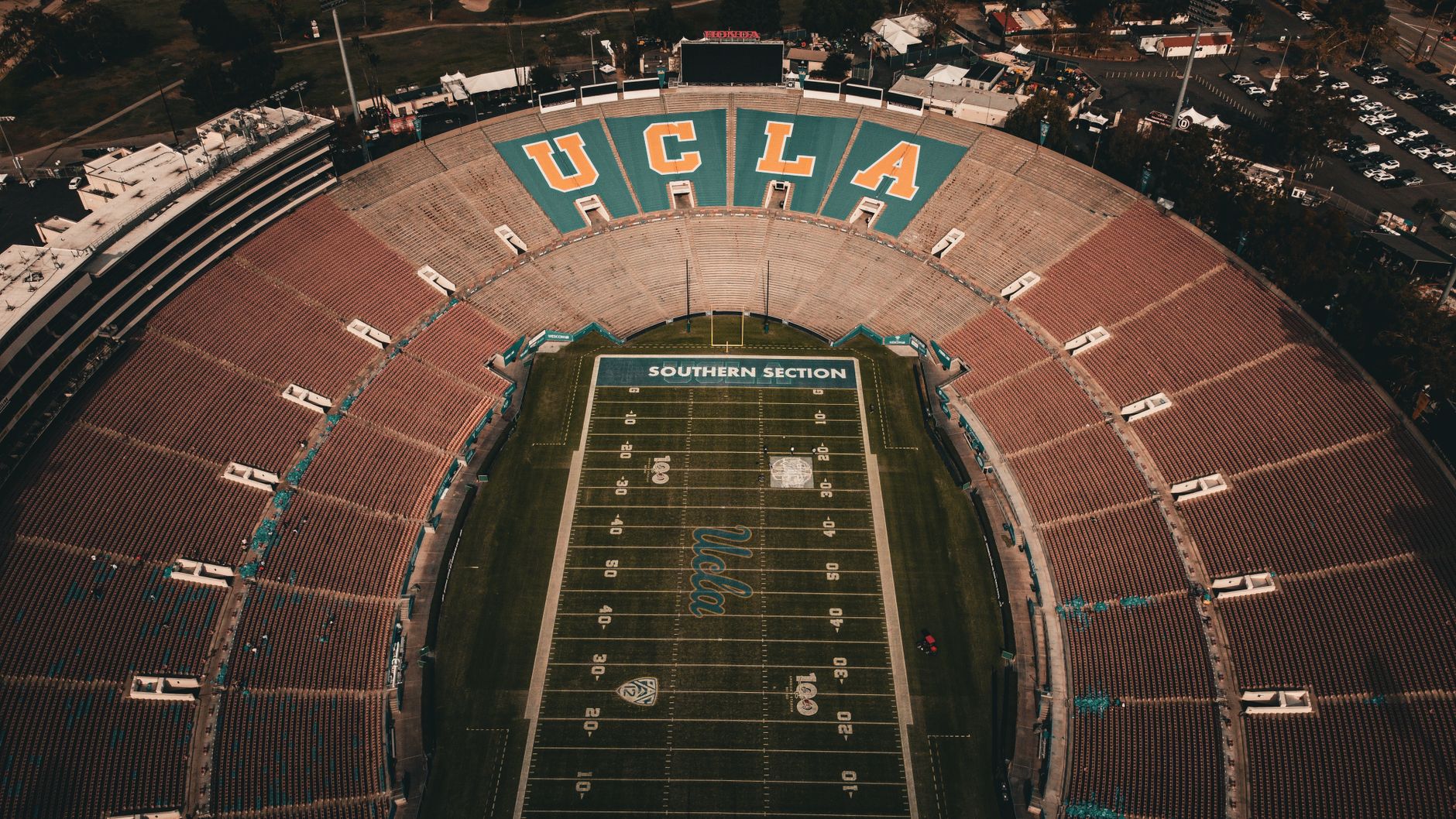
Photo by Caio Cezar on Pexels
A contrarian conclusion follows from comparing the three rounds: the most valuable 2026 insight is not always the newest headline. Social Security figures are valuable because they are official and dated. MLB projections are valuable when they track development evidence across time. World Cup predictions improve when they identify what could invalidate the forecast. In all three cases, the winning habit is version control: record the source, date, number, and assumption.
The Final Score & Who Should Pick What
Choose official Social Security data if your priority is household planning, MLB development metrics if you follow prospect pathways, and Pitch Notes if you need structured 2026 World Cup analysis. The three subjects cannot be ranked by one universal score because they answer different questions: income thresholds describe financial rules, draft timelines describe talent conversion, and football forecasts describe uncertain competitive outcomes.
My final score is based on reliability, usefulness, and volatility:
- Social Security 2026 figures: 9/10 reliability. The Social Security Administration publishes the governing numbers, including the 2.8% COLA and $184,500 taxable maximum.
- MLB prospect timelines: 6/10 reliability. Historical benchmarks help, but injuries, assignments, and roster decisions can change outcomes.
- World Cup match predictions: 5/10 reliability before lineups. Models improve with confirmed team news, yet football remains high variance.
- Pitch Notes as a monitoring tool: 8/10 usefulness. Its value is strongest when predictions are read with tactics, player data, and risk controls.
The decision rule is simple. Use confirmed figures for financial planning, rolling performance data for baseball, and scenario-based analysis for football. Do not transfer certainty from one category to another: a government benefit table is not comparable to a match forecast, and a draft ranking is not a guaranteed career path. [Internal Link: responsible sports betting guide]

Photo by Caio on Pexels
The year 2026 rewards readers who ask one additional question: “What would change this conclusion?” If the answer is a new SSA notice, a player promotion, a confirmed injury, or a lineup shift, monitor that event directly. This approach is less exciting than headline chasing, but it produces cleaner decisions and fewer expensive errors.
Before you plan, predict, or place a wager, verify the latest source and set a clear limit.
Frequently Asked Questions
Q: What is the most important confirmed Social Security change for 2026?
A: The most important confirmed change is the 2.8% COLA for Social Security and SSI recipients. The estimated average retired-worker benefit rises from $2,015 to $2,071 per month, while the maximum taxable earnings limit increases from $176,100 in 2025 to $184,500 in 2026. The employee Social Security and Medicare tax rate remains 7.65%, so the rate does not change even though the taxable wage base expands.
Q: How do I calculate the 2026 Social Security COLA increase?
A: Multiply your 2025 monthly benefit by 1.028 to estimate the 2026 amount before other deductions. For example, a $2,000 benefit becomes approximately $2,056, an increase of $56 per month. Medicare premiums, federal tax withholding, and benefit-specific adjustments can change the final deposit, so confirm the actual amount through the Social Security Administration rather than relying only on arithmetic.
Q: What is the difference between the 2026 COLA and the taxable maximum?
A: The COLA adjusts benefit payments by 2.8%, while the taxable maximum determines how much annual earnings are subject to the Social Security portion of payroll tax. In 2026, the taxable maximum is $184,500, compared with $176,100 in 2025. Medicare has no earnings cap, and high earners may also face the additional 0.9% Medicare tax above applicable income thresholds.
Q: How quickly can a 2026 MLB Draft pick reach the majors?
A: An exceptional 2026 MLB Draft pick could reach the majors within one year, but most prospects require longer development. Six players from the 2024 Draft debuted before their first anniversary, providing a recent benchmark rather than a guarantee. College pitchers and advanced college hitters may move fastest, while younger players commonly need additional seasons for physical, technical, and defensive development.
Q: What should I track when evaluating a 2026 MLB prospect?
A: Track age, competition level, strikeout and walk rates, contact quality, defensive position, workload, assignment level, and injury status. Draft round is useful context but does not forecast the debut date by itself. Reassess after meaningful samples, such as 20 to 30 games or a substantial pitching workload, instead of overreacting to one strong series or one poor outing.
Q: What does Pitch Notes cover for the 2026 FIFA World Cup?
A: Pitch Notes covers 2026 World Cup match predictions, team tactics, player statistics, and tournament developments for football fans. Useful analysis should combine recent form, confirmed lineups, injuries, formation changes, travel, and opponent style. Predictions are probabilities rather than guarantees, so readers should follow local laws, avoid chasing losses, and never stake money they cannot afford to lose.
Q: How can I use 2026 predictions more responsibly?
A: Use a prediction as one input, not as a command to wager. Check the publication date, compare the estimated probability with the available odds, identify the forecast’s failure condition, and set a fixed budget before considering any bet. If the lineup, injury situation, or market price changes materially, discard the old analysis and reassess rather than defending a previous opinion.
Want ongoing 2026 data, tactics, and tournament coverage?